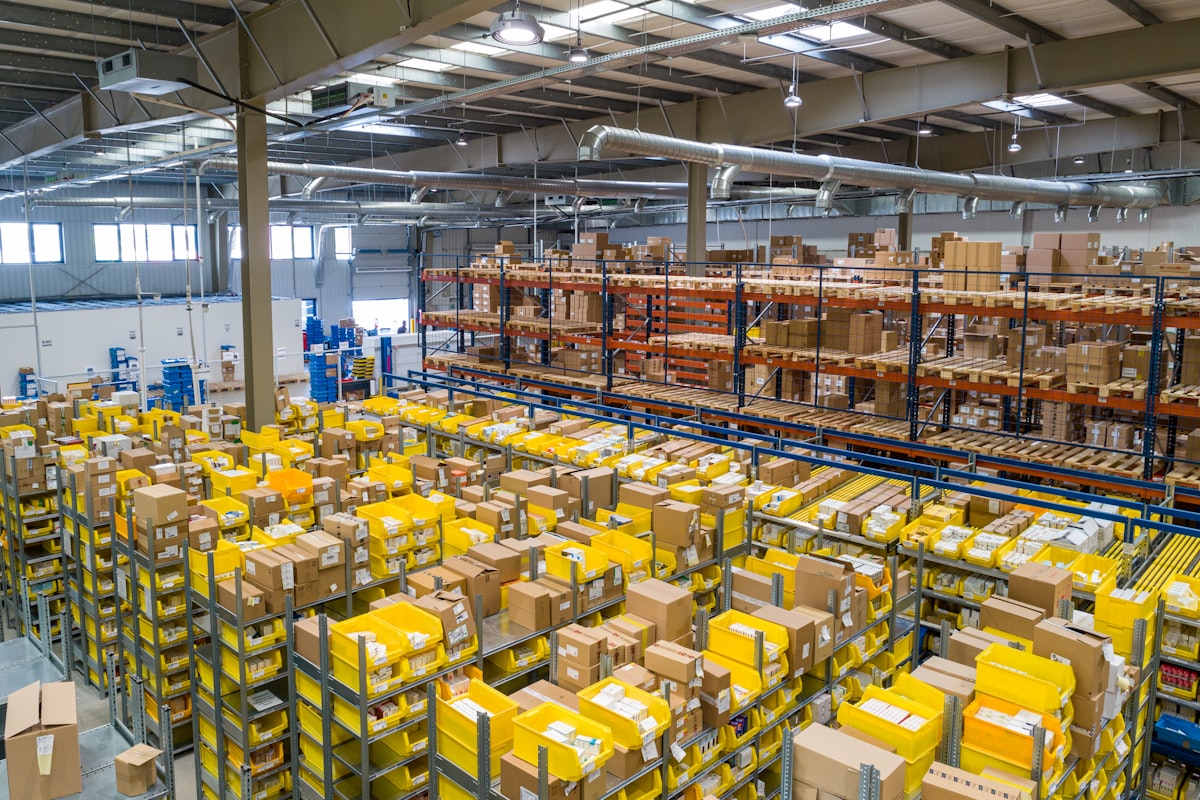
The European Manufacturing Landscape: Lean, Global, and Vulnerable
Europe's manufacturing sector is a paradox. It is simultaneously the most efficient in the world — German automotive plants achieve 95%+ uptime with just-in-sequence precision — and the most exposed to global supply chain disruption. The reason is simple: European manufacturing runs on parts from Asia, and the distance between supplier and factory is 8,000+ kilometers.
From the auto plants of Stuttgart and Munich to the aerospace clusters of Toulouse and Hamburg, from the medical device hubs of Switzerland and Ireland to the EV battery gigafactories of Hungary — European manufacturers depend on components shipped from China, Japan, South Korea, and Southeast Asia. When that supply chain breaks, the question isn't whether to use urgent air freight. It's which tier of urgent air freight, on which route, and how fast.
The European Stockout Scenario: A Day in the Life
Consider a typical Thursday at an automotive plant near Stuttgart, Germany:
- 06:00: The morning shift begins. The line starts producing 850 vehicles per day on a just-in-sequence schedule.
- 08:15: The materials manager notices that the expected delivery of wire harnesses from a supplier in Kunshan, China (normally arriving by sea freight with 35-day transit) has not been confirmed. The sea freight vessel was delayed 5 days by congestion at Rotterdam port.
- 09:30: Production control confirms: current wire harness inventory will last until Friday 14:00. After that, the line stops.
- 10:00: The crisis call goes out: can anyone get 300 kg of wire harnesses from Shanghai to Stuttgart in under 48 hours?
This scenario plays out — in variations — at European manufacturing plants every week. The solution is always the same framework: assess the gap, choose the right service tier, execute with customs pre-clearance, and deliver before the buffer runs out.
The Three-Tier Solution Framework for European Plants
Tier 1: OBC for Critical Small Components (Under 70 kg)
When the missing part is small but absolutely critical — a semiconductor module, a custom sensor, a prototype validation part — On Board Courier (OBC) is the fastest possible solution.
European OBC scenario: A medical device plant in Basel, Switzerland needs a batch of specialized circuit boards (12 kg total) from Shenzhen for an FDA validation run scheduled for Monday morning. The boards were supposed to arrive by standard air freight but were held by export customs in Shenzhen for documentation review.
Solution: OBC dispatch. - Day 1, 18:00 (Shenzhen): Courier picks up the shipment at the supplier's facility. Export customs cleared with pre-filed documentation. - Day 1, 22:30: Courier boards direct flight Shenzhen → Frankfurt (LH 7329). - Day 2, 05:00 (Frankfurt): Courier lands, clears EU import customs (pre-arranged broker with power of attorney on file), and boards connecting transport to Basel. - Day 2, 09:00 (Basel): Shipment hand-delivered to the medical device plant. Monday validation run proceeds on schedule.
Total door-to-door: 15 hours. Cost: approximately $6,500. Value of preventing a 6-week FDA submission delay: immeasurable.
Tier 2: NFO for Mid-Weight Line-Down Parts (50–500 kg)
When a line-down emergency involves a larger quantity of parts — wire harnesses, stamped metal components, plastic injection-molded parts — Next Flight Out (NFO) provides the optimal balance of speed and cost.
European NFO scenario: The wire harness crisis at the Stuttgart plant described above. 300 kg of harnesses needed in under 48 hours.
Solution: NFO on the next Shanghai → Munich flight. - Day 1, 14:00 (Shanghai time): Freight forwarder receives the crisis call. Books 300 kg of belly cargo space on Lufthansa LH 727 (Shanghai Pudong → Munich, departing 23:50). - Day 1, 18:00: Shipment picked up from supplier in Kunshan (1.5 hours from PVG airport). Export customs pre-filed. - Day 1, 23:50: Flight departs Shanghai. - Day 2, 05:30 (Munich time): Flight lands at Munich Airport. Import customs pre-cleared — shipment released within 90 minutes. - Day 2, 08:00: Dedicated truck departs Munich airport for Stuttgart (200 km, 2.5 hours). - Day 2, 10:30: Shipment arrives at the Stuttgart plant. Production continues without interruption.
Total door-to-door: ~20 hours. Cost: approximately $2,800 (300 kg at ~$9/kg + trucking). Savings: an estimated $600,000 in avoided line-down costs.
Tier 3: Charter for Bulk Emergency Resupply (500+ kg)
When a major disruption — a port closure, a supplier shutdown, a customs embargo — threatens to halt production for weeks, and the missing inventory totals 1 ton or more, a dedicated freighter charter is the only solution.
European charter scenario: During a port strike that froze all sea freight containers at Rotterdam for an estimated 2 weeks, a German EV manufacturer needed 4 tons of battery modules from a supplier in Ningde, China. Without these modules, their assembly plant would stop within 3 days, affecting 600+ vehicles per day of production.
Solution: Boeing 777-F charter from Shanghai Pudong to Frankfurt. - Day 1: Charter booking confirmed. Aircraft positioned at PVG. - Day 2, 02:00: 4 tons of battery modules loaded (DG-certified packaging for lithium batteries). Export customs cleared. - Day 2, 03:30: Charter flight departs PVG. - Day 2, 09:00 (Frankfurt): Flight lands. Customs pre-cleared for all 4 pallets. - Day 2, 12:00: Two trucks deliver to the plant. Production continues uninterrupted.
Total door-to-door: ~34 hours. Cost: approximately $180,000 (charter + ground handling + trucking). Savings: estimated $1.2M in avoided production losses.
The Customs Advantage: Why European Plants Need Pre-Clearance
The single biggest time trap in China → Europe urgent air freight isn't the flight — it's customs. A flight from Shanghai to Munich takes 11 hours. A customs hold at Munich can add 4–8 hours or more. The difference between a good urgent air freight partner and an average one is measured at the customs counter.
EU Import Customs: The Pre-Arrival Filing Advantage
The EU's Automated Import System (AIS) allows import declarations to be filed before cargo arrives. A well-prepared freight forwarder submits the import declaration while the aircraft is still in the air, so customs processes the entry during flight time. By the time the plane lands, customs clearance is either complete or requires only a brief document check.
Average customs times at major European airports:
| Airport | Without pre-filing | With pre-filing + broker |
|---|---|---|
| Frankfurt (FRA) | 3–6 hours | 60–90 minutes |
| Munich (MUC) | 2–5 hours | 45–90 minutes |
| Amsterdam (AMS) | 2–4 hours | 30–60 minutes |
| Budapest (BUD) | 3–6 hours | 60–120 minutes |
Common EU Customs Delays for Chinese Shipments
- Incorrect HS classification: Chinese exporters sometimes use different HS codes than EU importers expect. A pre-vetted supplier reconciles codes before shipping.
- Missing Certificate of Origin: Required for EU-China trade. Without it, the shipment faces full duty rates and potential inspection.
- Dual-use export controls: Certain electronics, semiconductors, and machinery components are subject to EU dual-use regulations. Missing export licenses cause immediate holds.
- CE marking compliance: Products entering the EU market require CE certification. Urgent shipments without CE documentation face extended review.
Key European Destinations and Their Urgent Air Freight Profiles
Stuttgart and Munich (Germany) — Automotive Hubs
Stuttgart (STR) and Munich (MUC) are the primary gateways for automotive parts into Germany. Porsche, Mercedes-Benz, BMW, and Audi all operate plants within a 200 km radius. NFO and OBC are the most commonly used services, with typical part profiles of 5–300 kg per shipment.
Budapest (Hungary) — The New EV Manufacturing Hub
Hungary has emerged as the European epicenter for Chinese EV investment. BYD, Great Wall, and BMW all operate or are building EV plants near Budapest. This has created a surge in urgent air freight demand on the China → Budapest route, particularly for:
- Battery cell modules and BMS components
- Electric motor subassemblies
- Power electronics (inverters, converters)
- Prototype and validation parts for new model launches
For more on why Hungary has become so important, read: Hungary's EV Manufacturing Investment Policy & Supply Chain Logistics Implications
Toulouse and Hamburg (Germany) — Aerospace Clusters
Toulouse (TLS) is the home of Airbus, while Hamburg (HAM) hosts both Airbus and Lufthansa Technik. AOG (Aircraft on Ground) urgent freight to these airports typically uses OBC for small parts (actuators, sensors, avionics modules) and NFO for larger components (landing gear parts, structural elements).
Basel and Zurich (Switzerland) — Medical Device and Pharma
The Swiss medical device and pharmaceutical corridor (Basel-Zurich) handles high-value, temperature-controlled urgent freight. OBC is frequently used for clinical trial materials, while NFO with active temperature-controlled packaging handles larger pharmaceutical shipments.
Building Your European Urgent Air Freight Playbook
If you operate a manufacturing plant in Europe with Chinese supply chain dependencies, here's what to prepare before the next stockout:
1. Map Your Critical Part Categories
Identify the top 10 part categories that would halt production if missing for 48 hours. For each, document: part number, weight per shipment, supplier location, current transit time, and daily cost of a line stoppage.
2. Pre-Identify the Service Tier for Each
Based on weight and urgency: - Under 70 kg, same-day need → OBC - 50–500 kg, 48-hour window → NFO - 500+ kg, multi-day crisis → Charter
3. Pre-Vet a Supplier with European Customs Expertise
Choose a freight forwarder with: - Direct airline relationships on China → Europe routes - EU customs brokers at Frankfurt, Munich, and Budapest - Experience in your industry (automotive, aerospace, medical) - 24/7 response capability - All three service tiers (OBC, NFO, charter)
4. Pre-File Importer Documentation
Work with your supplier to set up: - EORI number registration for EU import - Power of attorney for your customs broker - Pre-verified HS codes for all critical part categories - CE compliance documentation on file
5. Run a Tabletop Exercise
Simulate a stockout scenario: "It's 10 AM on a Thursday. Part X is delayed. The line stops in 30 hours. What do we do?" Walk through the response with your freight forwarder, customs broker, and production team. Identify gaps before they become crises.
Need Urgent Air Freight?
OBC, NFO, and charter services from China to Europe and Americas. 24/7 response.
Request a QuoteThe Bottom Line for European Manufacturers
The era of reliable, predictable sea freight from China to Europe is over — at least in the sense that supply chain disruptions are now frequent enough to require a rapid-response backup plan. European manufacturers that build urgent air freight capabilities into their risk management framework will maintain production continuity through disruptions that halt their competitors.
The cost of preparation is zero (a master services agreement with a vetted supplier costs nothing until you use it). The cost of unpreparedness starts at $200,000 per day and goes up from there.
Ready to build your urgent air freight playbook? Start with the comprehensive guide: The Urgent Air Freight Supplier Selection Handbook — then see a real emergency delivery in action: Case Study: Shanghai to Stuttgart in 18 Hours. For a detailed comparison of your service options, read NFO vs OBC vs Regular Air Freight.